Recent Research
DECEMBER 13, 2011 | Policy Points by COMMONWEALTH FOUNDATION
The Cost of Pennsylvania's Education Failures
Lawmakers are considering providing school choice to low-income children trapped in violent and failing schools. While some lawmakers are concerned about the cost of school vouchers, the cost of educational failure for all taxpayers through welfare, corrections, and lost jobs is many times greater.
NOVEMBER 10, 2011 | Commentary by REP. RYAN AUMENT
A New Teacher Evaluation System for Pennsylvania
After numerous meetings and conversations with constituents, teachers, school administrators and education policy experts, I have come to the conclusion that we must have a comprehensive way to identify quality teachers, so that we can retain them, encourage them and ensure students have access to them. We must also be able to assist those
OCTOBER 18, 2011 | Policy Points by COMMONWEALTH FOUNDATION
Pennsylvania's Failing, Violent Schools
Nearly 82,000 children are enrolled in the 141 public schools with available data on violence in Pennsylvania's lowest-performing 5 percent on student proficiency. These schools reported more than 4,500 violent incidents in the 2009-10 school year alone.
Recent Blog Posts
DECEMBER 9, 2011
Patriot News (Mostly) Endorses School Choice
This week, the Patriot News editorial board wrote an endorsement of a school voucher proposal in Pennsylvania. Here is the key pro argument:
The case for vouchers is obvious: There are about 150 schools in this commonwealth that have consistently underachieved. Some of those schools are in the Harrisburg School District - mere feet from the state Capitol.
Any middle-class family would simply move to a better school district or send their children to a private school. That is not an option for lower-income families.A museum could be built for all the remedies that have been tried in failing schools and made little difference. The state has substantially increased public education funding in the last decade, there are more charter schools, and a parade of principals and superintendents have given it their best shot. There have even been state takeovers of various districts, where the elected school board steps aside and some sort of appointed board takes the reins.
While there have been pockets of success - such as Harrisburg's SciTech High School - the overall situation remains dire in certain places. Vouchers are not another Band-Aid; they are a true game changer. If the legislation is done correctly, a student can potentially transfer from a school that is not achieving to one that is.
The editorial offers a few improvements, which merit discussion. First:
The reality is there are not enough open spaces at private and charter schools in this commonwealth to accept all the students from the state's worst schools.
A far better option is to do what Gov. Tom Corbett said in his October education speech and allow low-income students to also use their voucher at another public school. At the moment, SB 1 does allow that, although public schools are not required to take voucher students.
To make sure everyone is clear, charter schools are public schools and cannot charge tuition. The voucher component does not affect charters. However, part of Gov. Corbett's education reform agenda includes charter school reform, which would allow alternative authorizers of charter schools, increasing the supply and number of seats available.
In private schools, there is actually a large number of open seats. Perhaps not enough to accommodate "all" the students in the failing schools, but enough to those who will take advantage of the program in the early years. And as demand for private schools increases, so will supply.
As to the Patriot's proposal to require public schools to participate in the voucher program and take students from other districts, this is a good policy. But it will face intense political opposition—as such a plan did during the voucher fights under Gov. Ridge—from many school boards and suburban districts.
Finally, the Patriot writes,
The House should amend the bill to make private schools — or at least students on vouchers — take PSSAs.
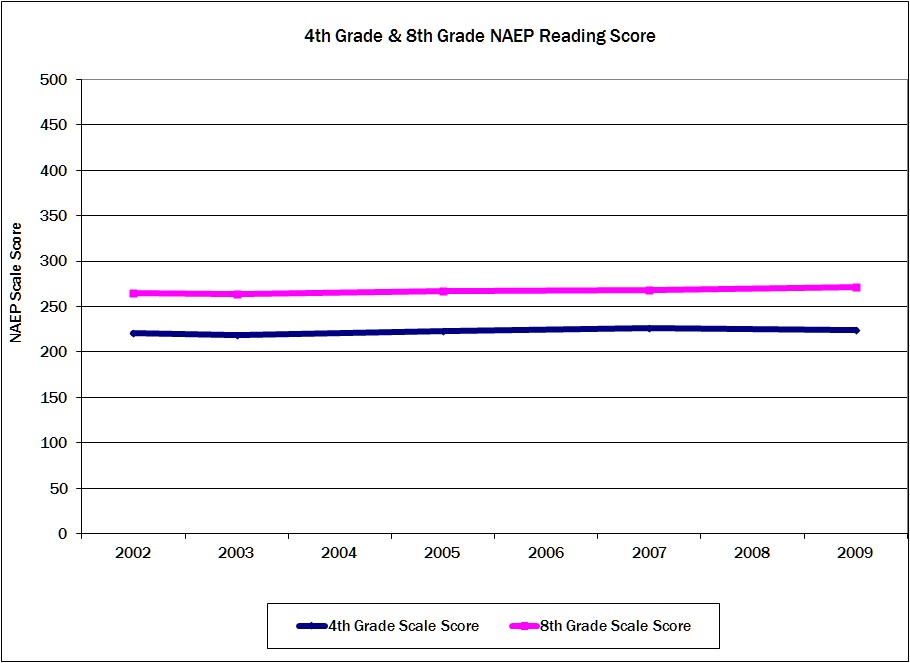
But the PSSA doesn't equate to accountability. These failing public schools administer the PSSA, and 60 percent of students don't make proficiency. This is not accountable. The PSSA is a weak test, which inflates proficiency rates. We pointed out in 2008 how the PSSA is less rigorous than the National Assessment of Educational Progress—about 80% more students make proficiency—and the latest evidence indicates that Pennsylvania's standards are getting weaker relative to other states. Why impose a weak standard on private schools? Even public schools complain about this mandate which drives up costs and doesn't improve education.
posted by NATHAN BENEFIELD | 10:08 AM | 0 comment
DECEMBER 8, 2011
School Choice in Pa. is Cure for Disaster
An excellent commentary by Jeanne Allen in the Delaware County Times sums up the case for school choice and the empirical evidence:
Pennsylvania’s neighbors have led by example and have provided exceptional advice. Students in Washington, D.C.’s Opportunity Scholarship Program posted graduation rates that were 18 percent above their conventional public school peers.
Students who participated in the Milwaukee Parental Choice Program for four years demonstrated significantly higher learning gains in math (11 percentage points) and reading (6 percentage points) than their peers in conventional public schools. In addition, they graduated at a rate that was 18 percent higher than students in conventional public schools.
Students who participated in the Cleveland Scholarship and Tutoring Program demonstrated a 7-percentage point increase in reading scores and a 15 percentage point increase in math scores over their peers in conventional public schools.
Low-income students participating in a Florida corporate voucher program are keeping pace with — and in many cases outpacing — all students nationwide (not just low-income children), despite the fact that the scholarships are a third of the cost of the per pupil expenditures in conventional schools.
The data do not lie. School choice works.
posted by NATHAN BENEFIELD | 01:22 PM | 0 comment
DECEMBER 8, 2011
Four of Five Philadelphia Students Not Proficient in Reading or Math
Yesterday, the National Center for Education Statistics (part of the U.S. Department of Education) released district perfomance data on the National Assessment of Educational Progress (NAEP). This is part of the "Nation's Report Card" provided biannually.
The results for Philadelphia (the only Pennsylvania city participating) are disturbing (or should be).
Fewer than 20 percent of Philadelphia students in 4th or 8th grade made proficiency in reading or math. Performance among low-income students fared even worse. That is, four of every five students don't reach proficient levels. Philadelphia's performance ranks worse than the rest of the nation, even in comparison to other large cities.
The status quo simply is not good enough.
| NAEP School Performance 2011 | ||
| 4th Grade | % Proficient or Advanced | |
| Schools (Public) | Reading | Math |
| Philadelphia | ||
| All Students | 14% | 20% |
| White | 27% | 43% |
| Black | 9% | 12% |
| Hispanic | 10% | 16% |
| Free Lunch Eligible | 11% | 17% |
| All Large Cities (All Students) | 23% | 30% |
| Nation (All Students) | 32% | 39% |
| 8th Grade | % Proficient or Advanced | |
| Schools (Public) | Reading | Math |
| Philadelphia | ||
| All Students | 16% | 18% |
| White | 37% | 32% |
| Black | 13% | 13% |
| Hispanic | 9% | 10% |
| Free Lunch Eligible | 13% | 15% |
| All Large Cities (All Students) | 23% | 26% |
| Nation (All Students) | 32% | 34% |
| Source: http://nces.ed.gov/nationsreportcard/districts/ | ||


Here are the snapshots for Philadelphia public schools:
Mathematics: Grade 4
Mathematics: Grade 8
Reading: Grade 4
Reading: Grade 8
posted by NATHAN BENEFIELD | 08:21 AM | 0 comment

RSS FEEDS